
Table of Contents
ToggleExpert Guide to Types of False Ceiling | Everything You Need to Know
A false ceiling is no longer just a decorative addition to a home or office. Today, it plays an important role in improving lighting, reducing heat, concealing electrical services, and creating a more comfortable indoor environment. Whether you’re designing a new home, renovating an apartment, or planning a corporate office, choosing the right false ceiling can significantly enhance both aesthetics and functionality.
In this guide, we’ll explain the different types of false ceilings, compare popular materials, discuss lighting ideas, costs in Chennai, and help you choose the best option for your space.
What is a False Ceiling?
A false ceiling, also known as a suspended ceiling or drop ceiling, is a secondary ceiling installed below the building’s original structural ceiling. Unlike the main concrete ceiling, it is not a structural element—it is a designer ceiling created using materials such as gypsum, grid panels, POP, wood, or PVC.
False ceilings are widely used in both residential and commercial interiors to:
- Improve the overall appearance of a room
- Integrate ceiling lights seamlessly
- Conceal electrical wiring, AC ducts, plumbing pipes, and network cables
- Reduce heat transfer and improve AC efficiency
- Enhance acoustic performance in offices and meeting rooms
For example, in modern homes, a gypsum false ceiling creates a clean and elegant look while hiding LED strip lights. In corporate offices, grid ceilings provide easy access to electrical and HVAC systems for future maintenance.
Why Install a False Ceiling?
Installing a false ceiling offers much more than visual appeal. It improves the functionality and comfort of your living or working space.
Key Benefits
- Improved aesthetics: Creates a premium, finished look that complements modern interiors.
- Concealed wiring and ductwork: Hides electrical cables, plumbing pipes, AC ducts, and sprinkler systems for a cleaner appearance.
- Better lighting integration: Supports recessed lights, cove lighting, profile lights, and spotlights without visible wiring.
- Reduced AC consumption: The reduced ceiling height decreases the room volume, allowing air conditioners to cool the space more efficiently.
- Heat reduction: Acts as an insulating layer, reducing heat from the roof especially beneficial in Chennai’s hot climate.
- Sound insulation: Helps reduce echoes and noise in offices, conference rooms, and home theatres.
- Enhanced comfort: Creates a more balanced and comfortable indoor environment.
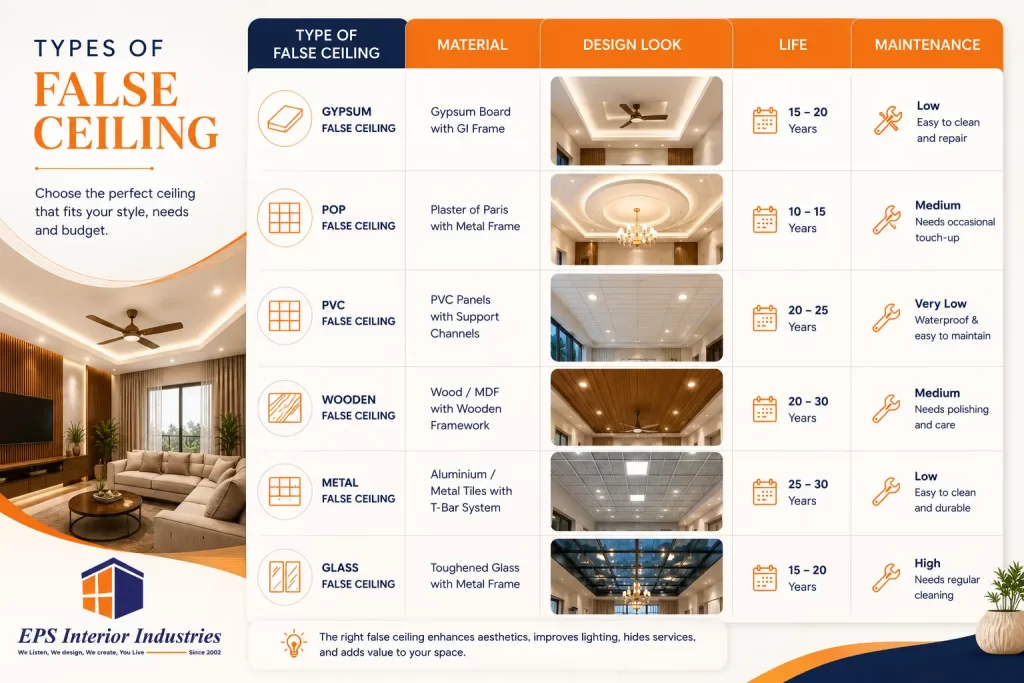
Types of False Ceiling Based on Material
The right ceiling material depends on your budget, design preference, maintenance requirements, and the type of space. Below are the most commonly used false ceiling materials.
Grid False Ceiling
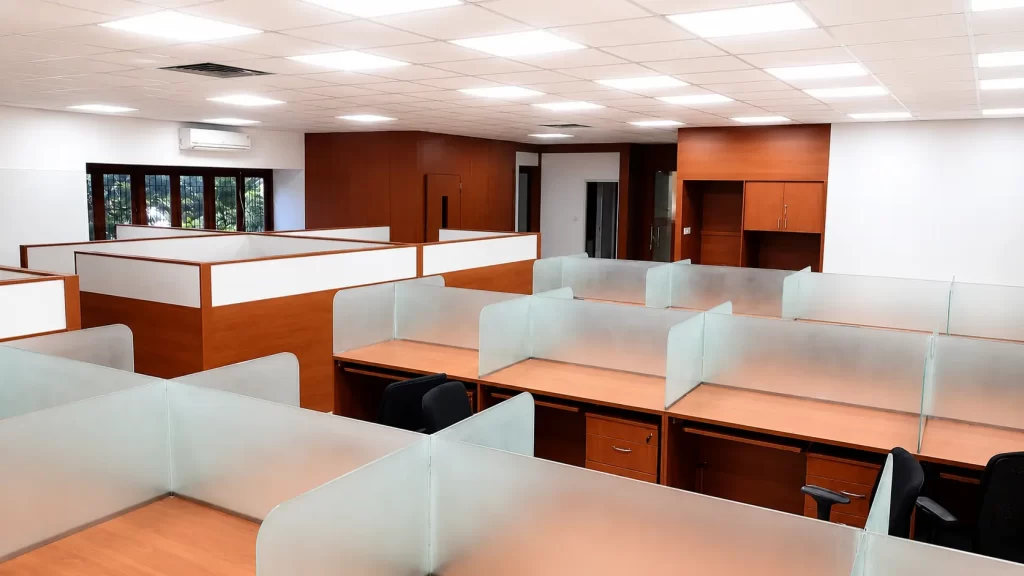
Grid ceilings consist of a suspended metal framework with removable ceiling tiles.
Advantages
- Easy access to wiring, ducts, and pipes above the ceiling
- Simple repairs and maintenance
- Suitable for future modifications
Limitations
- Limited decorative design options
Best Applications
- Corporate offices
- Factories
- Commercial buildings
- Hospitals
Maintenance: Very easy
Typical Lifespan: Around 10 years
Gypsum False Ceiling
Gypsum is the most popular material for modern residential interiors because of its smooth finish and excellent design flexibility.
Advantages
- Elegant appearance
- Wide variety of ceiling designs
- Smooth finishing suitable for modern homes
Limitations
- Difficult to access hidden services after installation
- Repairs require partial dismantling
Best Applications
- Homes
- Apartments
- Corporate offices
- Retail shops
Maintenance: Moderate
Typical Lifespan: 8–10 years
POP (Plaster of Paris) False Ceiling
POP ceilings are handcrafted and allow intricate decorative patterns.
Advantages
- Excellent design flexibility
- Beautiful cornices and decorative borders
- Smooth seamless finish
Limitations
- Best suited only for smaller areas
- Longer installation process compared to gypsum
Best Applications
- Decorative borders
- Small living rooms
- Entrance foyers
Maintenance: Moderate
Typical Lifespan: 8–10 years
Wooden False Ceiling
Wooden ceilings add warmth and luxury to interiors.
Advantages
- Rich premium appearance
- Natural texture
- Creates an elegant ambience
Limitations
- Heavier than other materials
- Not suitable for covering large ceiling areas
- Requires regular maintenance
Best Applications
- Luxury homes
- Villas
- Executive cabins
- Reception areas
Maintenance: Moderate to High
Typical Lifespan: 8–10 years
PVC False Ceiling
PVC ceilings are lightweight, waterproof, and economical.
Advantages
- Cost-effective
- Waterproof
- Easy to clean
- Low maintenance
Limitations
- Limited design appeal
- Less premium appearance
Best Applications
- Bathrooms
- Utility rooms
- Washrooms
Maintenance: Very easy
Typical Lifespan: 4–5 years
Metal False Ceiling
Metal ceilings are mainly used in industrial and specialized commercial environments.
Advantages
- Extremely durable
- Fire resistant
- Long lifespan
Limitations
- Not suitable for residential interiors
- Limited decorative appeal
Best Applications
- Factories
- Warehouses
- Industrial facilities
Maintenance: Moderate
Typical Lifespan: Around 20 years
Glass False Ceiling
Glass ceilings create a luxurious and visually striking interior.
Advantages
- Attractive appearance
- Enhances lighting
- Makes spaces appear brighter
Limitations
- Difficult to maintain
- Higher installation cost
Best Applications
- Luxury residences
- Hotels
- Premium commercial interiors
Typical Lifespan: 4–5 years
Gypsum vs Grid False Ceiling: Which is Better?
Feature | Gypsum Ceiling | Grid Ceiling |
Installation | More complex | Quick and easy |
Finish | Premium, seamless | Standard modular finish |
Durability | 8–10 years | Around 10 years |
Cost | Generally lower | Slightly higher depending on tiles |
Repairs | Difficult | Very easy |
Design Flexibility | Excellent | Limited |
Which One Should You Choose?
- Gypsum False Ceiling is the ideal choice for homes, apartments, villas, and retail spaces where aesthetics are the priority.
- Grid False Ceiling is better suited for offices, commercial buildings, hospitals, and factories because maintenance and future modifications are much easier.
Types of False Ceiling Based on Design
Different ceiling designs create different visual effects.
Peripheral Ceiling
A gypsum border runs around the room with lighting integrated along the edges. Ideal for living rooms and bedrooms.
Single Layer Ceiling
A clean, simple gypsum ceiling suitable for compact apartments and minimalist interiors.
Double Layer (Island) Ceiling
Adds depth with two ceiling levels and is commonly used in living rooms and corporate offices.
Cove Ceiling
Features concealed LED strip lighting for soft ambient illumination.
Tray Ceiling
Creates a recessed central section that adds elegance and makes rooms feel larger.
Coffered Ceiling
Uses square or rectangular recessed panels to create a luxurious classic appearance.
Floating Ceiling
Usually made using wood or PVC to create the illusion that the ceiling is suspended.
Curved Ceiling
Made using POP for unique artistic shapes in premium interiors.
Best False Ceiling for Each Room
There is no single “best” false ceiling for every room. The ideal choice depends on your preferred design, lighting requirements, maintenance expectations, and budget.
- Living Room & Dining: Double-layer gypsum ceiling with cove lighting.
- Bedroom: Single-layer or cove gypsum ceiling with warm lighting.
- Kitchen: Moisture-resistant gypsum or PVC ceiling.
- Bathroom: PVC ceiling because of its water resistance.
- Home Office: Simple gypsum ceiling with recessed lighting.
Corporate Offices & Commercial Spaces
Double-layer grid or gypsum ceilings work well for offices.
Recommended:
- Material: Grid or Gypsum
- Lighting: LED panel lights, profile lights, spotlights
- Design: Double-layer ceiling for conference rooms and reception areas
False Ceiling Lighting Ideas
Lighting significantly enhances the beauty and functionality of a false ceiling.
Popular ceiling lighting options include:
- Round LED lights
- Square LED panels
- Spot lights
- Button lights
- Profile lights
- LED strip lights
- Cove lighting
Unlike wall-mounted lights, ceiling lights distribute illumination evenly, minimize shadows, and maintain the required lux level throughout the room. This creates a brighter and more comfortable environment for both homes and offices.
False Ceiling Cost in Chennai
False ceiling costs in Chennai generally range from ₹65 to ₹155 per sq.ft., depending on several factors.
The overall cost is influenced by:
- Material selection
- Ceiling design complexity
- Ceiling height
- Integrated lighting
- Labour charges
- Custom decorative elements
Simple gypsum ceilings cost less than designer ceilings with multiple lighting layers and custom patterns.
Common Mistakes to Avoid
Avoid these common planning mistakes:
- Excessive ceiling drop that makes rooms feel smaller
- Blocking fire sprinklers
- Not providing access for AC maintenance
- Concealing pipes that require future servicing
- No maintenance access panels
- Poor lighting planning
Proper planning during the design stage prevents expensive modifications later.
Is a False Ceiling Suitable for Chennai’s Climate?
Yes. False ceilings are highly suitable for Chennai’s hot and humid climate when designed correctly.
A well-designed gypsum ceiling helps reduce heat transfer from the roof, lowering AC usage. Moisture-resistant materials should be used in bathrooms and utility areas, while adequate ventilation must always be maintained.
For Chennai homes, gypsum remains one of the best choices because it combines aesthetics with thermal comfort.
How to Choose the Right False Ceiling
Instead of selecting a ceiling solely based on appearance, consider the following checklist:
- Your budget
- Room function
- Ceiling height
- Lighting requirements
- Maintenance needs
- Chennai’s climate
- Preferred design style
Remember, there is no universal “best” false ceiling. The right choice depends on balancing design, durability, maintenance, and functionality.
Wrap Up
A false ceiling is much more than a decorative feature. It improves lighting, enhances comfort, conceals services, reduces heat, and creates a refined interior for homes and commercial spaces. From elegant gypsum ceilings for living rooms to practical grid ceilings for offices, the right choice depends on your space, budget, maintenance expectations, and design preferences.
If you’re planning a new home, office, or renovation project, consulting an experienced EPS Interior design team can help you select the most suitable false ceiling material and design for long-term performance, aesthetics, and value.
FAQs
There is no single best option. Gypsum is ideal for homes, while grid ceilings are better for offices and commercial spaces.
Gypsum offers faster installation and a cleaner finish, while POP provides greater flexibility for decorative designs and intricate detailing.
Most gypsum, POP, and wooden ceilings last 8–10 years with proper maintenance. Grid ceilings typically last around 10 years, while metal ceilings can exceed 20 years.
It helps reduce heat transfer from the roof and improves AC efficiency, making rooms more comfortable, especially during Chennai's hot summers.
Yes. PVC false ceilings are generally preferred for bathrooms because they are waterproof and easy to maintain.

Related Blogs
Villa Interior Design in Chennai: Complete Guide for Luxury Homes
Home › Blog › Villa Interior Design Guide Villa Interior Design in Chennai: Complete Guide for Luxury Homes A villa gives you something an apartment…
Modular vs Custom Interiors | Which Is Better in Chennai?
Home › Blog › Modular Vs Custom Interiors Modular vs Custom Interiors: Which Is Better for Your Home in Chennai? When planning the interiors of…
Common Interior Design Mistakes and How to Avoid Them
Home › Blog › Interior Design Mistakes Common Interior Design Mistakes and How to Avoid Them Whether you’re designing your dream apartment, renovating a villa,…

Founded in 2002, EPS Interior Industries specializes in future-ready luxury designs for interior, exterior, and infrastructure needs. By leveraging our own Chennai-based manufacturing plant, we provide ISI-certified, factory-direct products that guarantee world-class quality at an affordable price point.
Contact Info
Address:
No. L10, SIDCO Guindy Industrial Estate,
Chennai - 600032
Phone:
+91 99405 40702 | +91 93637 33845